


Charged with providing timely disaster alerts, Watch Duty is adding new features including power outage data.
The popular app has signed on with PowerOutage.com to show where outages exist and how long they may last. The Orlando-based platform draws the data from utility companies in the United States, Canada and the United Kingdom.
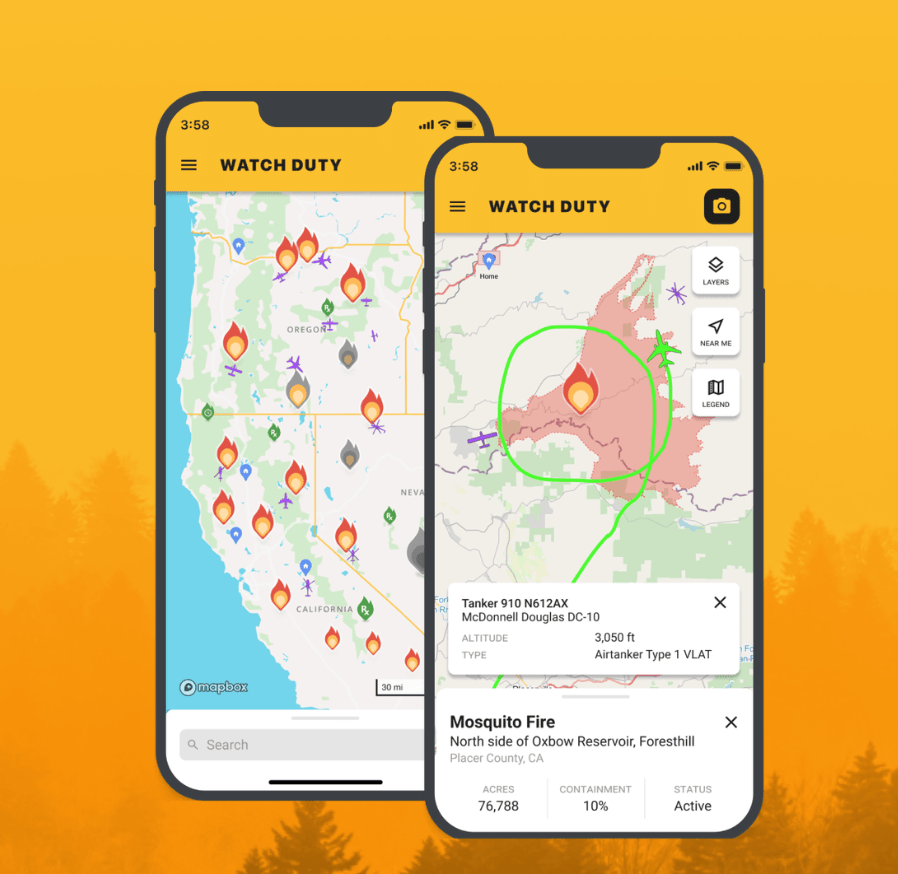 The feature is now live, using API (Application Program Interface) technology that Watch Duty pays to access. API is a set of protocols that allows different software components to communicate with one another.
“We’re always looking for ways we can add value for our users in times of fear and uncertainty, and power outages certainly contribute to that feeling of being cut off from information. They also come with serious safety risks for many people,” Watch Duty spokeswoman Liz Caselli-Mechael said.
According to the American Housing Survey conducted by the U.S. Census Bureau, one in four U.S. households (33.9 million) experience a power outage every year. The report funded by the U.S. Housing and Urban Development Department adds that many of these outages, spawned by wildfire threats or related infrastructure issues, last for over six hours.
Tubbs, Kincade, LNU Lightning Complex, Glass — the North Bay has seen its fair share of devastating wildfires that create the need to have all the alert information in one place.
Annie Barbour knows better than most about this. The Santa Rosa woman’s home burned, along with 1,400 others in the Tubbs Fire of 2017. The tragic firestorm that roared through Napa County, over the Mayacama Mountains and into Sonoma’s county seat of Santa Rosa, killed 22 and destroyed over 5,600 structures in its wake.
The experience led to her becoming the founder of Coffey Strong, a support group for her neighborhood’s recovery, as well as being hired at the nonprofit insurance advocacy organization, United Policyholders.
For the San Francisco-based organization, Barbour has managed disaster resource centers in Maui, after its 2023 firestorm, and in Los Angeles following the costly Palisades and Eaton wildfires in January 2025.
As resources go, Barbour has joined other fire survivors as a longtime fan of Watch Duty, which proved significantly valuable during the Los Angeles fires.
“As far as emergencies are concerned, Watch Duty is king,” she said, calling the app “everybody’s Valium,” at least in areas where the Internet is accessible.
“I think it’s a great idea,” Barbour said of Watch Duty installing power outage data, alongside the app’s location, severity, response and updates to wildfires.
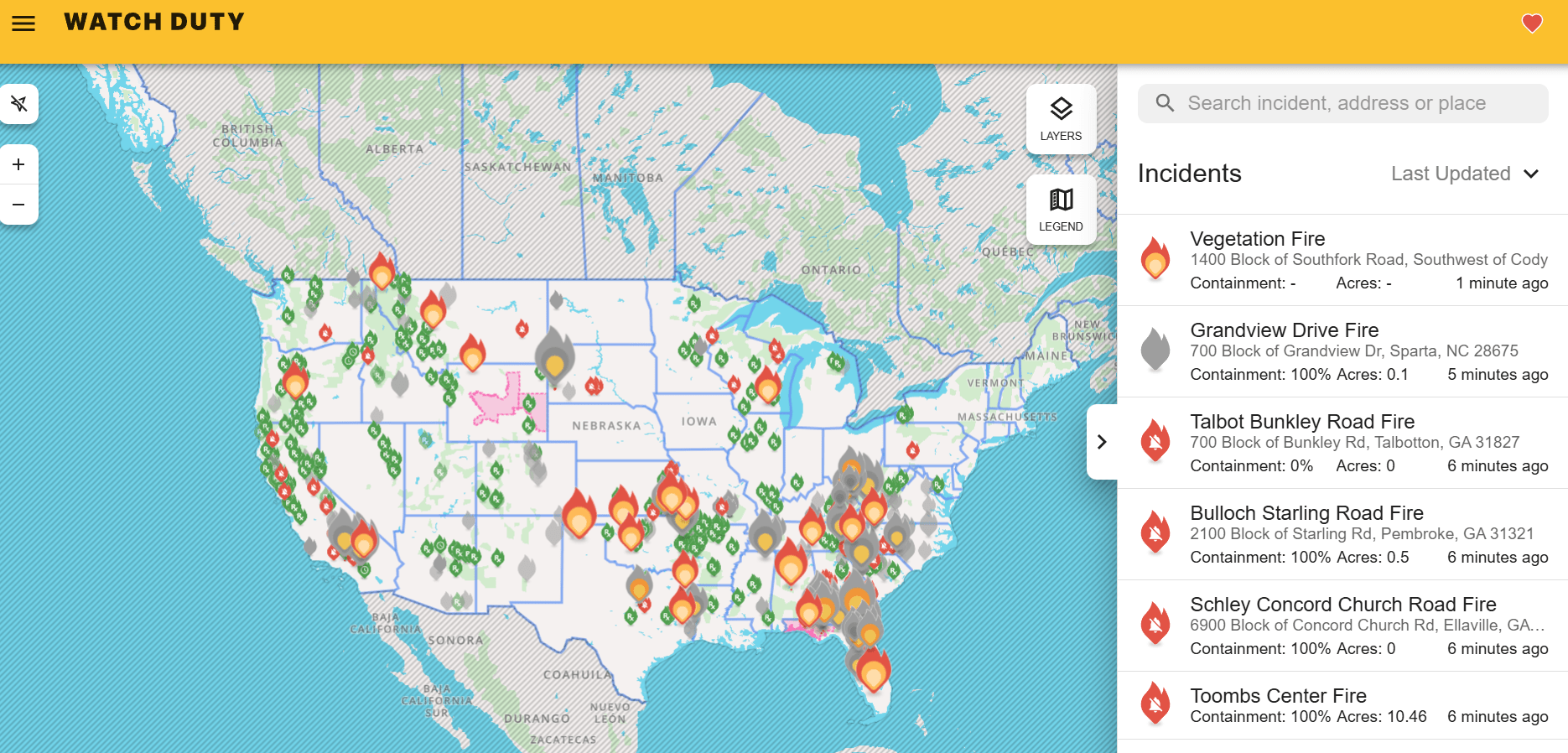
Watch Duty allows outages to display in layers showing single points or geographic areas. Each outage includes the energy provider, start time, estimated restoration, number of customers affected and reason for the outage (according to the utility).
“It goes without saying, the more information consumers can get to make decisions, the better. It’s in everybody’s best interest to have that information bundled,” Sonoma County Office of Emergency Services Deputy Director Sam Wallis said.
Watch Duty has other plans too.
The computer app will report on other disasters this year, starting with a flooding feature. Flooding is a chronic reality, during winters along the Russian River. The disaster poses a “clear and critical expansion” by virtue of the number of deaths it causes, Watch Duty noted in a statement.
Looking ahead to 2026, plans are underway for the nonprofit organization to offer paid features to help fund its mission. Last year, the entity more than doubled its headcount, bringing its total staff and volunteers to 292.
With a $6 million budget, Watch Duty derives its revenue through donations from individuals, companies and foundations. It provides varied memberships with premium features. Paid features include tracking firefighting flights and custom mapping tools.
The company states that it costs 39 cents per person “to inform and protect someone for an entire year.”
With its signature ringtone, Watch Duty started in August 2021, when two Sonoma County software developers created a program that supplies wildfire alerts on mobile devices and computers.
Before Watch Duty came onto the scene, co-founder and CEO John Mills sought alerts during the Walbridge Fire, one wildland blaze that was part of the large-scale LNU Lightning Complex that broke out in August 2020.
 The Healdsburg man teamed up with Damian Boune of Cazadero, who feared another 2017 Tubbs or 2019 Kincade firestorm would devastate the region again.
In about a year, the app’s user list skyrocketed to 193,000. Last year, 16.8 million people turned to the app, according to company officials. The website is visited 1.17 billion times, averaging 3 million visits per day, Watch Duty adds.
Caselli-Mechael stressed that Mills is proud of his company’s accomplishments and partnerships, reaching a wide range of users. They range from public agencies and private companies to first responders and individual device users.
“2026 is the year that we turn rapid growth into lasting strength, expanding to new hazards, reaching more households and building the foundation that will carry Watch Duty into the next era,” Mills said in a statement.